Healthcare Talent Acquisition – AI Healthcare Recruitment Trends Shaping the Future of Hiring
The global healthcare industry is facing a growing challenge: how to recruit qualified professionals faster, smarter, and more efficiently while maintaining high standards of patient care.
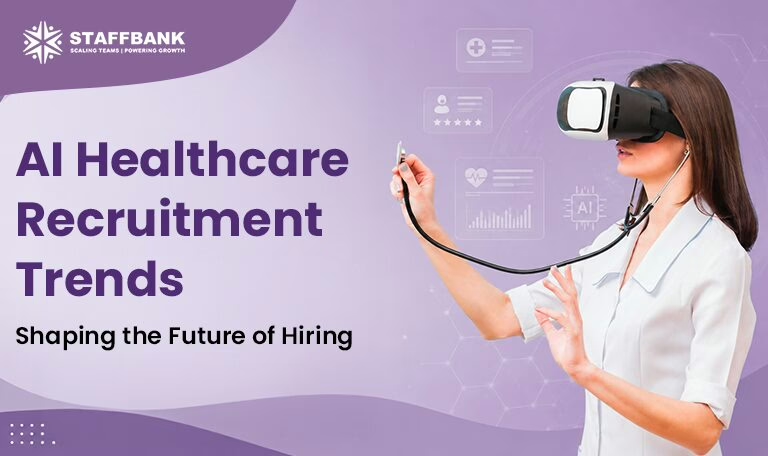
Rising workforce shortages, increasing demand for specialised roles, and cross-border hiring complexities are pushing healthcare organisations to rethink traditional recruitment models.
Today, artificial intelligence (AI) is transforming the way healthcare employers attract, assess, and retain talent. From automating candidate screening to improving workforce planning, modern recruitment platforms are helping healthcare providers make more informed hiring decisions.
In this blog, we explore the key AI healthcare recruitment trends shaping the future of hiring across hospitals, healthcare staffing firms, clinics, and international healthcare organisations.
The Growing Need for AI in Healthcare Recruitment
Healthcare recruitment has become increasingly complex in recent years. Organisations are not only competing for talent locally but also globally. Manual hiring processes often lead to delays, increased costs, and poor candidate experiences.
This is where AI healthcare recruitment solutions are creating a significant impact. AI-powered systems can analyse large volumes of candidate data, identify suitable talent faster, and streamline recruitment workflows.
Healthcare employers are now using AI to:
- Reduce time-to-hire
- Improve candidate matching
- Enhance compliance checks
- Predict staffing requirements
- Improve workforce retention
- Optimise recruiter productivity
As healthcare systems continue to evolve, AI-driven recruitment is becoming a strategic necessity rather than an optional technology investment.
1. Data-Driven Recruitment is Improving Hiring Accuracy
One of the biggest trends reshaping the industry is the rise of data driven healthcare recruitment. Healthcare organisations are increasingly relying on real-time recruitment data and analytics instead of intuition-based hiring decisions.
AI tools can analyse:
- Candidate qualifications
- Clinical experience
- Licensing and certifications
- Hiring success rates
- Retention trends
- Candidate engagement patterns
This allows recruiters to identify which candidates are most likely to succeed in specific healthcare roles.
For example, hospitals can use recruitment analytics to determine which sourcing channels produce the highest-quality nurses or which regions deliver better long-term retention rates for international healthcare hires.
By leveraging data insights, healthcare organisations can reduce hiring risks and build stronger clinical teams.
2. Healthcare Talent Acquisition Technology is Streamlining Global Hiring
The adoption of advanced talent acquisition technology healthcare platforms is rapidly growing across the global healthcare sector. AI-powered recruitment systems now help organisations manage complex hiring operations across multiple countries and healthcare specialisations.
Modern recruitment platforms can automate:
- CV screening
- Candidate ranking
- Interview scheduling
- Credential verification
- Compliance tracking
- Communication workflows
For healthcare organisations managing international recruitment campaigns, these tools significantly reduce administrative burden and improve operational efficiency.
AI-based healthcare talent acquisition systems also help reduce unconscious bias by evaluating candidates using consistent criteria. This creates a fairer and more transparent recruitment process for global healthcare talent.
3. Workforce Analytics is Helping Healthcare Employers Plan Ahead
Another major trend is the increasing use of workforce analytics healthcare solutions to support long-term workforce planning.
Healthcare providers are using AI-powered workforce analytics to:
- Forecast staffing shortages
- Predict turnover risks
- Analyse workforce productivity
- Identify skill gaps
- Plan future hiring needs
Predictive workforce modelling is especially valuable in healthcare environments where staffing shortages directly impact patient care quality.
For example, hospitals can analyse historical workforce data alongside patient demand trends to estimate future nursing requirements. This allows HR teams to proactively recruit talent before shortages become critical.
By combining workforce analytics with recruitment strategies, healthcare organisations can build more resilient and sustainable staffing models.
4. Recruitment Technology is Enhancing Candidate Experience
The healthcare recruitment process is becoming increasingly candidate-focused. Leading employers understand that a poor recruitment experience can discourage highly skilled professionals from accepting job offers.
Advanced recruitment technology healthcare platforms are improving candidate engagement through:
- AI-powered chatbots
- Automated updates
- Faster application processing
- Mobile-friendly recruitment systems
- Personalised communication
Healthcare candidates now expect a seamless digital recruitment experience similar to other industries.
AI recruitment tools can also provide recruiters with insights into candidate preferences, helping organisations tailor communication and improve offer acceptance rates.
A faster and more responsive recruitment process is particularly important in competitive healthcare markets where top candidates often receive multiple offers.
5. Video Interviewing is Becoming a Standard Recruitment Tool
The rise of remote hiring has accelerated the adoption of video interview healthcare recruitment technologies worldwide.
AI-powered video interviewing platforms offer several advantages for healthcare recruitment teams:
- Faster screening of international candidates
- Reduced travel costs
- Improved scheduling flexibility
- Quicker hiring decisions
- Enhanced collaboration between hiring managers
Some advanced platforms also use AI to analyse communication patterns, language proficiency, and behavioural indicators during interviews. However, ethical use of AI remains important, and healthcare employers must ensure recruitment decisions remain fair and unbiased.
Video interviewing is especially valuable for international healthcare recruitment, where organisations often need to assess candidates from different countries efficiently.
As remote recruitment becomes more common, video interviewing will continue to play a critical role in global healthcare hiring strategies.
6. Predictive Hiring is Transforming Workforce Planning
Predictive healthcare hiring is emerging as one of the most powerful applications of AI in recruitment.
Predictive hiring tools use historical recruitment and workforce data to forecast:
- Candidate success likelihood
- Employee retention probability
- Future staffing demands
- Seasonal workforce fluctuations
- High-performing candidate profiles
Healthcare organisations can use predictive models to make more strategic hiring decisions and reduce costly turnover.
For example, AI systems can identify patterns among successful long-term employees and use that information to prioritise similar candidates during recruitment.
Predictive hiring also supports proactive workforce management by helping healthcare providers prepare for future skill shortages before they affect operations.
7. AI is Supporting International Healthcare Recruitment
Global healthcare recruitment continues to grow due to workforce shortages in many countries. AI is helping recruitment agencies and healthcare employers manage international hiring more efficiently.
AI-driven systems can assist with:
- Candidate sourcing across multiple countries
- Language translation
- Credential verification
- Visa documentation workflows
- Compliance monitoring
- International candidate engagement
This is particularly beneficial for healthcare organisations recruiting nurses, doctors, and allied healthcare professionals from overseas markets.
AI-powered recruitment platforms also improve scalability, allowing healthcare organisations to manage large international recruitment campaigns with greater accuracy and speed.
Ethical Considerations in AI Healthcare Recruitment
While AI offers significant benefits, healthcare organisations must use recruitment technology responsibly.
Key ethical considerations include:
- Preventing algorithmic bias
- Ensuring candidate privacy
- Maintaining human oversight
- Complying with global data protection regulations
- Providing transparent hiring practices
AI should support recruiters rather than replace human decision-making entirely. Healthcare recruitment requires empathy, cultural understanding, and clinical judgement that still depend heavily on experienced recruitment professionals.
Organisations that balance automation with human expertise will achieve the best recruitment outcomes.
The Future of AI in Healthcare Recruitment
The future of healthcare hiring will be increasingly shaped by intelligent recruitment systems and workforce analytics.
In the coming years, we can expect:
- More advanced predictive hiring tools
- Greater automation in compliance management
- AI-powered workforce planning
- Enhanced candidate engagement technologies
- Smarter international recruitment systems
- Improved integration between HR and clinical workforce data
As healthcare labour markets become more competitive, organisations that adopt AI-driven recruitment strategies will gain a significant advantage in attracting and retaining top healthcare talent.
Conclusion
AI is rapidly transforming the global healthcare recruitment landscape. From data driven healthcare recruitment to predictive healthcare hiring, advanced technologies are helping healthcare organisations recruit more efficiently, improve workforce planning, and enhance candidate experiences.
The growing adoption of healthcare talent acquisition technology healthcare solutions, workforce analytics healthcare systems, recruitment technology healthcare platforms, and video interview healthcare recruitment tools demonstrates how AI is becoming central to modern healthcare hiring strategies.
Healthcare organisations that embrace AI responsibly and strategically will be better positioned to solve workforce challenges, improve operational efficiency, and build stronger healthcare teams for the future.