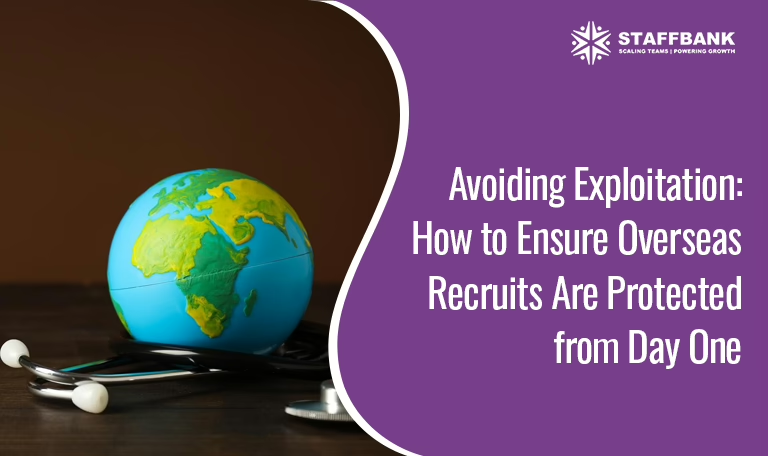
Avoiding Exploitation: How to Ensure Overseas Recruits Are Protected from Day One
Overseas healthcare recruitment now underpins staffing strategy across the NHS, private hospital groups and Middle East health systems alike. But the same cross-border pipelines that solve chronic workforce shortages can, if poorly governed, expose candidates to serious harm.
Recruitment fee debt, contract substitution and passport retention are not hypothetical risks they are documented failure modes that regulators, unions and international bodies actively monitor. For CFOs, HR Directors and Medical Directors sponsoring international medical staffing programmes, protecting recruits from day one is both an ethical obligation and a commercial safeguard against reputational and regulatory exposure.
Why Exploitation Risk Is Built Into the Recruitment Journey
International healthcare recruitment involves multiple intermediaries sourcing agents, licensing bodies, relocation providers and the employer itself often spanning several jurisdictions with inconsistent labour protections. Each handoff is a point where a candidate’s interests can be deprioritised in favour of speed or margin. Common exploitation patterns include:
- Recruitment or ‘processing’ fees charged directly to the candidate, sometimes disguised as training or visa costs
- Contract substitution, where terms agreed during sourcing are altered once the candidate has resigned their prior role or relocated
- Passport or qualification document retention by an agent or employer, restricting the candidate’s freedom to leave
- Substandard or undisclosed accommodation deductions that erode take-home pay below agreed levels
- Absence of an independent grievance channel, leaving candidates unable to raise concerns without risking their visa status
What ‘Day One’ Protection Actually Requires
Protection cannot start on the candidate’s first shift by then, the highest-risk decisions have already been made. A defensible framework for overseas healthcare recruitment addresses risk at every stage of the journey, from first contact through to probation.
1. Pre-Offer: Transparent Terms and Zero-Fee Recruitment
Candidates should receive written terms salary, deductions, accommodation, working hours and contract length before they resign existing employment. Reputable healthcare RPO providers operate on the employer-pays principle, meaning no fees are passed to the candidate at any stage of sourcing, licensing or relocation.
2. Licensing and Verification: No Shortcuts
Full and verifiable credentialing including primary source verification through bodies such as DataFlow, AHPRA, GMC, NMC or HCPC protects both the recruit and the patients they will treat. Rushed or partial verification increases the risk of candidates being placed in roles that do not match their disclosed qualifications, exposing them to disciplinary and immigration consequences later.
3. On Arrival: Document Control and Induction
Candidates must retain control of their own passport, degree certificates and licensing documents at all times. A structured induction should reconfirm contract terms in the candidate’s presence, in a language they are fully fluent in, with an opportunity to ask questions before signing anything further.
4. Ongoing: An Independent Route to Raise Concerns
Protection does not end at onboarding. Employers and their recruitment partners should provide a confidential, independent channel separate from the sponsoring line manager through which candidates can raise welfare, pay or accommodation concerns without fear of visa retaliation.
Red Flags Employers Should Investigate Immediately
- A sourcing agent asks the candidate for any payment, deposit or ‘guarantee’ fee
- Contract terms differ between the offer letter and the document presented on arrival
- Passports or original certificates are held by anyone other than the candidate
- Salary is paid in cash with no itemised payslip or deduction breakdown
- Candidates report they cannot contact anyone outside their direct employer
The Role of a Healthcare RPO Provider in Embedding Safeguards
A healthcare RPO provider sits closer to the candidate than most in-house teams can manage across high volume, multi-country pipelines. Where healthcare RPO services are delivered to a defined ethical standard, they give employers an auditable layer of protection that is difficult to replicate internally particularly across Middle East and Australian markets where licensing and immigration requirements shift frequently. Provider-led safeguards should include documented zero-fee policies, candidate-facing complaint channels independent of the client relationship, and regular welfare check-ins during the first 90 days of employment.
For ICB leads and Medical Directors evaluating a healthcare RPO partner, ethical sourcing credentials should carry the same weight in due diligence as fill rate or time-to-hire. A provider unable to evidence its safeguarding policy in writing is a governance gap, not a minor administrative omission.
Ethical vs Exploitative Practice: A Quick Reference
| Ethical overseas healthcare recruitment | Exploitative recruitment practice |
| No recruitment fees charged to the candidate | Candidate pays fees, deposits or ‘processing costs’ |
| Contract terms match the offer made at sourcing stage | Contract substitution on arrival or at the airport |
| Candidate holds their own passport and documents at all times | Passport or original documents withheld by employer or agent |
| Transparent, written accommodation and salary terms | Vague or verbal-only accommodation and pay arrangements |
| Independent route to raise concerns or exit the contract | No grievance route; resignation tied to debt or visa loss |
Building an Auditable Protection Framework
Boards and compliance teams increasingly expect overseas healthcare recruitment programmes to be auditable end to end. A defensible framework typically includes:
- A written, board-approved ethical recruitment policy referencing recognised standards (e.g. the ILO’s Fair Recruitment Initiative)
- Contractual clauses binding all sourcing agents and sub-agents to zero-fee recruitment
- Independent audit of accommodation, deductions and working hours within the first 90 days
- A named welfare contact separate from line management, with escalation routes documented
- Annual review of RPO and agency partners against modern slavery and ethical recruitment criteria
Choosing Healthcare RPO Services You Can Defend to a Regulator
When selecting a partner for international healthcare recruitment, ask providers to evidence their safeguarding approach directly rather than relying on general assurances. Request the zero-fee policy in writing, ask how candidate complaints are logged and escalated, and confirm which primary source verification bodies are used for each target market. A credible healthcare RPO will welcome this scrutiny it is the same standard they should already be applying to their own agent network.
Conclusion
Exploitation risk in international medical staffing is manageable, but only when protection is designed in from the first candidate conversation rather than retrofitted after a complaint or audit finding. Employers who hold their healthcare RPO provider to a documented, zero-fee, rights-based standard protect their recruits and materially reduce their own regulatory and reputational exposure in the process.