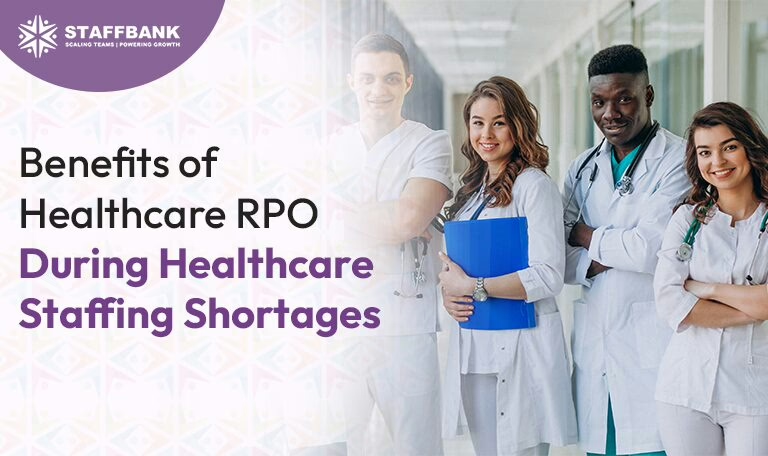
Benefits of Healthcare RPO During Healthcare Staffing Shortages
Healthcare staffing shortages have become one of the biggest operational challenges facing healthcare organizations worldwide. Hospitals, rehabilitation centres, aged care providers, clinics, and community healthcare services are all struggling to recruit and retain qualified professionals while managing increasing patient demand.
For healthcare leaders, the impact goes far beyond recruitment. Staffing shortages affect patient care quality, employee wellbeing, operational efficiency, compliance management, and long-term financial stability.
Many healthcare organizations are now realizing that traditional recruitment models are no longer enough to handle the scale and complexity of modern healthcare hiring. This is why healthcare RPO (Recruitment Process Outsourcing) has become an increasingly valuable solution during workforce shortages.
A healthcare RPO partner helps healthcare organizations improve hiring efficiency, strengthen workforce planning, and reduce recruitment pressure during periods of staffing instability.
The Growing Pressure on Healthcare Organizations
Healthcare systems globally are facing multiple workforce challenges at the same time.
Common issues include:
- Rising patient admissions
- Increased burnout among healthcare professionals
- Retirements and workforce attrition
- Growing demand for mental health and rehabilitation services
- International competition for healthcare talent
- Delays in filling critical positions
- Compliance and credentialing complexity
For many healthcare organizations, vacancies remain open for months, forcing existing staff to work overtime and increasing the risk of burnout and turnover.
As staffing shortages continue, healthcare leaders are under pressure to maintain safe staffing levels without compromising patient care standards.
Why Traditional Recruitment Is No Longer Enough
Many internal HR and recruitment teams are already overwhelmed managing daily workforce operations. During staffing shortages, recruitment demands increase rapidly while available resources remain limited.
Healthcare organizations often struggle with:
- Slow recruitment processes
- Limited access to qualified talent
- High-volume hiring demands
- Candidate drop-offs
- Delayed onboarding
- Compliance bottlenecks
- Poor workforce visibility
In highly competitive healthcare markets, delays in recruitment can result in losing qualified candidates to competing employers.
This is where healthcare RPO provides a more strategic and scalable recruitment approach.
Faster Access to Qualified Healthcare Talent
One of the biggest benefits of healthcare RPO during staffing shortages is faster access to talent.
Healthcare RPO providers maintain large healthcare talent networks that include:
- Nurses
- Allied health professionals
- Physicians
- Mental health specialists
- Rehabilitation professionals
- Healthcare support staff
Instead of starting recruitment from scratch each time a vacancy opens, healthcare organizations gain immediate access to pre-qualified candidate pipelines.
This significantly reduces time-to-hire for critical roles.
For healthcare providers facing urgent staffing gaps, faster recruitment directly supports operational continuity and patient care delivery.
Reducing Pressure on Internal HR Teams
Healthcare recruitment involves far more than posting job advertisements. Internal HR teams are often responsible for:
- Screening applications
- Scheduling interviews
- Managing compliance documents
- Coordinating onboarding
- Handling workforce planning
- Supporting employee relations
During workforce shortages, these responsibilities can quickly become overwhelming.
Healthcare RPO providers act as an extension of the internal recruitment team, taking over time-consuming hiring tasks and allowing healthcare leaders to focus on operations and patient care.
This support helps organizations improve recruitment efficiency without overloading internal teams.
Improving Candidate Experience
Healthcare professionals today expect a smooth and professional hiring experience. Long delays, inconsistent communication, and complicated onboarding processes often lead candidates to withdraw from recruitment processes.
Healthcare RPO providers improve candidate experience by offering:
- Faster communication
- Structured interview coordination
- Clear recruitment timelines
- Compliance guidance
- Personalized onboarding support
A better candidate experience helps healthcare organizations attract stronger talent while improving offer acceptance rates and workforce retention.
In competitive healthcare recruitment markets, candidate experience can significantly influence hiring success.
Supporting High-Volume Healthcare Hiring
Healthcare staffing shortages often create urgent large-scale recruitment needs.
Healthcare organizations may suddenly need to recruit:
- Multiple nursing teams
- Allied health professionals
- Temporary clinical staff
- Emergency care workers
- Mental health support teams
Managing high-volume recruitment internally can create operational bottlenecks and delays.
Healthcare RPO providers use structured recruitment systems and scalable hiring models that help organizations manage workforce expansion more efficiently.
This flexibility is especially valuable during:
- Seasonal demand surges
- Hospital expansions
- Public health emergencies
- New facility openings
- Multi-site recruitment campaigns
Strengthening Workforce Compliance
Healthcare recruitment involves strict regulatory and compliance requirements. Organizations must ensure that every healthcare professional meets licensing, credentialing, and background screening standards.
During urgent hiring situations, compliance processes can become rushed or inconsistent, increasing organizational risk.
Healthcare RPO providers help maintain workforce quality by supporting:
- Credential verification
- License monitoring
- Background checks
- Compliance tracking
- Workforce documentation management
This reduces the risk of compliance failures while helping organizations maintain patient safety standards.
Supporting International Healthcare Recruitment
Many healthcare organizations now rely on international hiring to address workforce shortages.
However, overseas recruitment often involves complex processes related to:
- Immigration requirements
- Professional licensing
- Credential equivalency
- Relocation support
- Cultural onboarding
Healthcare RPO solution help streamline these processes, making international recruitment more manageable and efficient.
By expanding access to global healthcare talent, organizations can build more sustainable workforce pipelines and reduce long-term staffing gaps.
Reducing Employee Burnout and Turnover
Workforce shortages place enormous pressure on existing healthcare employees. Long shifts, staffing gaps, and excessive overtime can lead to burnout, reduced morale, and higher turnover rates.
This creates a cycle where workforce shortages become even more severe over time.
Healthcare RPO helps organizations stabilize staffing levels faster, reducing pressure on current employees and improving workforce wellbeing.
More balanced staffing also supports:
- Better employee retention
- Improved workplace culture
- Higher job satisfaction
- Stronger patient care outcomes
Addressing staffing shortages proactively helps organizations protect both workforce health and operational performance.
Improving Workforce Planning and Visibility
One of the hidden challenges during staffing shortages is lack of workforce visibility.
Many healthcare organizations struggle to forecast future hiring needs accurately, resulting in reactive recruitment instead of proactive workforce planning.
Healthcare RPO providers often use workforce analytics and recruitment data to help organizations:
- Identify workforce trends
- Forecast hiring demand
- Build long-term talent pipelines
- Improve recruitment planning
- Reduce recurring staffing gaps
This strategic approach allows healthcare organizations to move from crisis hiring toward more sustainable workforce management.
Supporting Multi-Site Healthcare Operations
Large healthcare networks and hospital groups often face additional recruitment complexity due to multiple locations, departments, and workforce requirements.
Without centralized recruitment processes, hiring standards and candidate experiences can vary across facilities.
Healthcare RPO providers help standardize recruitment across multi-site operations, improving:
- Recruitment consistency
- Workforce quality
- Compliance management
- Hiring efficiency
- Employer branding
This centralized approach is especially valuable for healthcare organizations managing rapid expansion or geographically distributed teams.
Cost Benefits of Healthcare RPO
Many healthcare organizations initially view RPO as an additional expense. However, workforce shortages often create much higher hidden costs through:
- Overtime payments
- Delayed patient services
- Temporary staffing expenses
- Recruitment advertising costs
- Employee turnover
- Operational inefficiencies
Healthcare RPO helps reduce these costs by improving recruitment speed, workforce stability, and hiring efficiency.
Long-term workforce planning also helps organizations reduce reliance on emergency staffing solutions.
Conclusion
Healthcare staffing shortages continue to create significant operational and workforce challenges for healthcare organizations globally. Traditional recruitment approaches are often too slow and resource-intensive to respond effectively to today’s hiring demands.
Healthcare RPO companies a more strategic solution by helping organizations improve recruitment speed, strengthen workforce compliance, reduce HR pressure, and access larger healthcare talent networks.
More importantly, healthcare RPO helps healthcare providers move beyond reactive hiring and build stronger, more resilient workforce strategies for the future.
For healthcare organizations looking to improve staffing stability, protect employee wellbeing, and maintain high standards of patient care, healthcare RPO has become an essential workforce solution in an increasingly competitive healthcare environment.