Last-Minute Call-Outs: How Healthcare Workforce Solutions Solve the Coverage Crisis
It is 6:00 AM. A ward manager receives a call, two nurses have called out sick for the morning shift. The shift starts in two hours. There are patients to be cared for, medication rounds to be completed, and a safe staffing ratio to maintain. This is not a rare scenario.
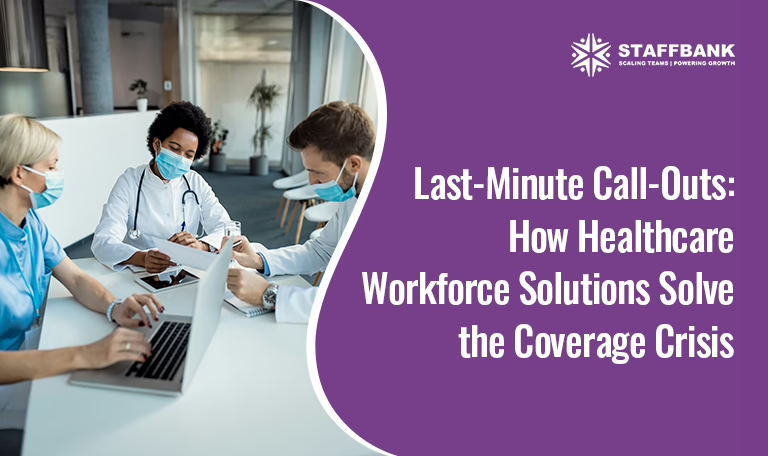
For healthcare decision makers across hospitals, community health settings, and long-term care facilities, last-minute call-outs are a daily operational reality, and how an organization responds to them defines its ability to maintain safe, high-quality patient care.
The question is no longer whether last-minute absences will happen. The question is whether your organization has the workforce infrastructure to absorb them without putting patients or staff at risk.
The Scale of the Problem
Last-minute call-outs are not isolated incidents. They are a symptom of broader workforce fragility, understaffed teams where one absence immediately creates a critical gap, burned-out staff taking more unplanned sick days, and recruitment pipelines that are too slow to keep up with attrition.
Why Call-Outs Are Increasing
- Chronic understaffing means there is no buffer, one absence directly creates an unsafe situation.
- Staff burnout and fatigue from prolonged short-staffed periods leads to higher rates of unplanned sick leave.
- Post-pandemic workforce shifts have left many healthcare organizations with leaner permanent teams and greater dependency on flexible staffing.
- Rising demand for healthcare services means more patients with fewer staff, increasing pressure across every shift.
- Higher voluntary turnover across nursing, allied health, and support roles has reduced organizational resilience.
The Immediate Impact of an Uncovered Shift
- Patient safety incidents are more likely when teams are operating below safe staffing ratios
- Remaining staff carry a disproportionate workload, accelerating burnout and increasing the likelihood of further call-outs.
- Regulatory obligations around safe staffing levels may be breached, creating compliance risk.
- Patient experience deteriorates as response times slow and care quality drops.
Why Traditional Responses Are No Longer Enough
Many healthcare organizations still rely on the same crisis-response playbook: call staff on their days off, ask nurses to extend their shifts, or send a desperate message to a general staffing agency. Each of these approaches has significant limitations.
Asking Permanent Staff to Cover
- Repeated requests to work additional shifts damage morale and accelerate burnout
- It is unsustainable as a long-term response and increases the risk of further voluntary turnover.
- It is also not always effective, staff have their own commitments and cannot always say yes.
Relying on General Staffing Agencies
- Generic agencies may not have candidates with the specific clinical competencies your setting requires.
- Last-minute placements from non-specialist agencies can mean placing staff who are unfamiliar with your department protocols.
- Without a strategic relationship in place, response times can be too slow for genuine emergencies.
No Backup Plan at All
Some organizations still operate without any structured contingency staffing arrangement, relying entirely on internal resources, a position that becomes untenable as workforce pressures increase
The need for structured, responsive, and strategically designed healthcare workforce solutions has never been clearer.
What Effective Healthcare Workforce Solutions Look Like
Modern healthcare workforce solutions go well beyond reactive gap-filling. They are designed to anticipate demand, maintain a ready pool of qualified candidates, and integrate with an organization’s permanent workforce strategy to reduce dependency on emergency cover over time.
1. On-Demand Access to Pre-Vetted Clinical Staff
The foundation of effective coverage crisis management is having immediate access to a pool of candidates who are already screened, credentialed, and ready to work in your specific setting.
- Pre-vetted nurses, allied health professionals, and healthcare support workers who can be deployed at short notice.
- Candidates matched to specific department requirements, ICU, mental health, theatres, community nursing, and more.
- Background checks, license verification, and clinical competency assessments already completed before placement.
2. Technology-Enabled Shift Matching
Leading healthcare hiring solutions now use sophisticated platforms to match available, qualified staff to open shifts in real time.
- Automated alerts to available candidates as soon as a shift becomes available.
- Matching based on specialty, location, shift length, and facility type.
- Digital timesheet and compliance management that reduces administrative burden on ward managers.
3. Integrated Bank and Agency Workforce Models
Rather than treating permanent staff, internal bank staff, and agency workers as separate and disconnected pools, integrated workforce models manage all three in a unified way.
- Internal bank staff are the first point of call for uncovered shifts, with agency staff as a reliable second layer.
- Transparent visibility across all available staffing resources in one system.
- Escalation protocols that move automatically from bank to agency if internal cover cannot be arranged within a set timeframe.
The Strategic Role of Healthcare RPO Services
For organizations dealing not just with shift-by-shift coverage gaps but with structural workforce shortages, healthcare RPO services offer a fundamentally different approach to the problem.
Recruitment Process Outsourcing (RPO) in healthcare means transferring all or part of the permanent recruitment function to a specialist provider, a healthcare RPO company that brings dedicated recruiters, established sourcing channels, and deep sector knowledge to bear on your organization’s talent pipeline.
What a Healthcare RPO Company Delivers
- Dedicated recruitment teams embedded in your organization, functioning as an extension of your HR department.
- Proactive talent pipelining that reduces the frequency of emergency vacancies by ensuring permanent roles are filled faster.
- Employer brand development that positions your organization as a destination employer for clinical staff.
- Data and analytics that give decision makers real-time visibility into vacancy rates, time-to-fill, cost-per-hire, and workforce trends.
- Scalable capacity that can flex up during periods of high vacancy and scale back during stable periods, without the fixed cost of a large internal recruitment team.
Why Healthcare RPO Services Reduce Last-Minute Call-Out Impact
The connection between RPO and operational coverage crises is direct. When permanent roles are filled faster and more consistently, teams are better staffed, individuals carry more manageable workloads, and the rate of burnout-driven sick leave decreases. A well-functioning healthcare recruitment outsourcing model reduces the frequency and severity of coverage gaps at their root, rather than simply reacting to them when they occur.
The Role of a Medical Recruitment Agency in Crisis Coverage
While RPO addresses the structural talent pipeline, a specialist medical recruitment agency provides the rapid-response capability that organizations need when a shift needs covering in hours, not days.
What Sets a Specialist Agency Apart
- Deep candidate networks across specific clinical specialties, not just general nursing but theatre nurses, paediatric nurses, ITU nurses, mental health practitioners, and more
- Understanding of the clinical competencies required in each setting, ensuring placed candidates are appropriate for the role, not just available.
- Established compliance and credentialing processes that mean candidates are always shift-ready.
- 24/7 availability for genuine emergency cover requirements.
Building a Strategic Agency Relationship
The organizations that manage last-minute call-outs most effectively are those that have built a strategic relationship with their agency partners before a crisis occurs, not those that pick up the phone for the first time at 6:00 AM.
- Agree preferred supplier arrangements with specialist agencies in advance
- Share your department-level staffing requirements and clinical protocols so agency staff arrive informed.
- Establish escalation processes and communication channels that work in real time.
- Review performance metrics, fill rates, response times, candidate quality, regularly to ensure standards are maintained.
International Healthcare Recruitment as a Long-Term Workforce Strategy
For organizations facing chronic shortages in specific clinical areas, international healthcare recruitment provides access to a broader global talent pool that domestic recruitment alone cannot fill.
Where International Recruitment Adds Value
- Nursing shortages in specialties such as critical care, theatres, and mental health where domestic supply is consistently insufficient.
- Allied health roles, particularly in physiotherapy, radiography, and occupational therapy, where trained professionals are in short supply domestically.
- GP and specialist physician roles in underserved areas where local recruitment has repeatedly failed.
Key Considerations for International Recruitment
Regulatory compliance – overseas candidates must meet the licensing and registration requirements of the destination country, which requires specialist knowledge of both the source and destination regulatory frameworks.
Ethical recruitment – organizations should ensure international recruitment is conducted in line with WHO guidelines on ethical international health workforce recruitment, avoiding sourcing from countries already experiencing critical health worker shortages.
Integration and retention – international recruits require structured onboarding, cultural orientation, and ongoing support to ensure long-term retention; organizations that invest in this see significantly higher retention rates among internationally recruited staff.
Timelines – international recruitment typically takes longer than domestic hiring, making it a medium to long-term workforce strategy rather than a short-term fix.
Building a Comprehensive Response to the Coverage Crisis
For healthcare decision makers, solving the last-minute call-out problem requires action at multiple levels simultaneously, not a single intervention.
Short-Term: Immediate Coverage Capability
- Establish preferred supplier relationships with specialist medical recruitment agencies.
- Implement technology platforms for real-time shift matching and bank staff management.
- Create clear escalation protocols so ward managers know exactly what to do when a shift is uncovered.
Medium-Term: Structural Workforce Improvement
- Engage a healthcare RPO company to accelerate permanent recruitment and reduce vacancy rates.
- Review and benchmark compensation and working conditions to reduce avoidable turnover.
- Invest in staff wellbeing, career development, and management quality to address the root causes of high sick leave.
Long-Term: Strategic Workforce Resilience
- Develop an international healthcare recruitment strategy for hard-to-fill specialties.
- Build employer brand recognition that attracts candidates proactively rather than reactively.
- Use workforce data and analytics to forecast demand and identify vulnerability before it becomes a crisis.
Final Thoughts
Last-minute call-outs are an operational reality in healthcare, but their impact on patient safety and staff wellbeing is not inevitable. Organizations that invest in comprehensive healthcare workforce solutions, combining rapid-response agency partnerships, healthcare RPO services for permanent pipeline management, specialist healthcare hiring solutions for shift coverage, and international healthcare recruitment for structural shortages, are demonstrably better positioned to maintain safe staffing levels regardless of the pressures they face.
The difference between an organization that absorbs a last-minute call-out without incident and one that scrambles to find cover at 6:00 AM is not luck. It is preparation, the right partnerships, and a strategic approach to workforce management that treats staffing as a core operational priority rather than a background administrative function.
If your organization is still reacting to coverage crises rather than managing them, now is the time to review your workforce strategy and explore what the right healthcare recruitment outsourcing partner can deliver.