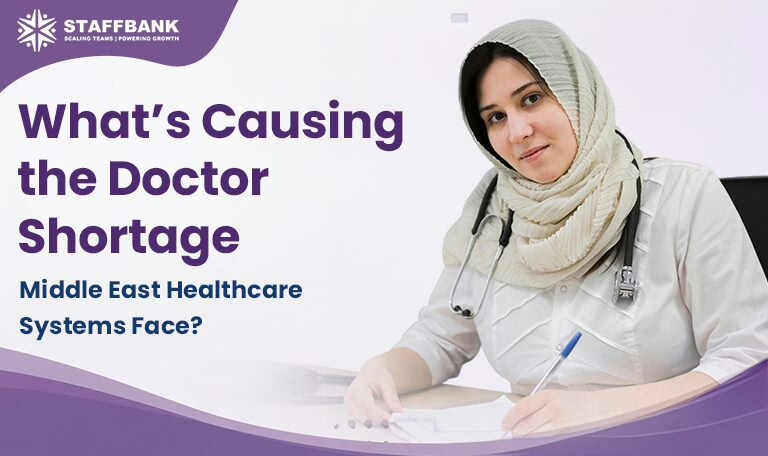
What’s Causing the Doctor Shortage Middle East Healthcare Systems Face?
Healthcare systems across the Middle East are facing growing pressure due to a significant shortage of qualified doctors. Rapid population growth, increasing healthcare demands, expanding medical infrastructure, and changing patient expectations are all contributing to the problem.
Countries across the Gulf Cooperation Council (GCC), including Saudi Arabia, the UAE, Qatar, and Oman, are investing heavily in healthcare transformation. However, the demand for skilled medical professionals continues to outpace supply.
In this blog, we explore the major factors behind the doctor shortage Middle East healthcare systems are experiencing and the strategies healthcare organisations are adopting to address the challenge.
Understanding the Doctor Shortage in the Middle East
The Middle East healthcare sector has expanded rapidly over the past decade. Governments are building new hospitals, specialised medical centres, and digital healthcare systems to support growing populations and medical tourism initiatives.
While healthcare infrastructure continues to improve, there remains a shortage of:
- General physicians
- Specialist consultants
- Surgeons
- Emergency medicine doctors
- Intensive care specialists
- Family medicine practitioners
The doctor shortage Middle East healthcare providers face is becoming one of the region’s biggest healthcare workforce challenges.
Key Causes of Doctor Shortages in the Middle East
1. Rapid Population Growth
The Middle East has experienced substantial population growth, especially in urban centres such as Riyadh, Dubai, Doha, and Abu Dhabi.
A growing population naturally increases demand for:
- Primary healthcare services
- Emergency care
- Specialist treatments
- Chronic disease management
Healthcare systems are struggling to recruit doctors quickly enough to meet rising patient volumes.
2. Expansion of Healthcare Infrastructure
Governments across the region are investing billions into healthcare development projects under national transformation plans such as:
- Saudi Vision 2030
- UAE healthcare expansion initiatives
- Qatar National Health Strategy
New hospitals and healthcare facilities require thousands of additional healthcare professionals, creating intense competition for qualified doctors.
As healthcare infrastructure expands faster than workforce availability, the doctor shortage Middle East hospitals experience continues to grow.
3. Increasing Demand for Specialist Doctors
The region is seeing higher rates of chronic illnesses such as:
- Diabetes
- Cardiovascular disease
- Obesity-related conditions
- Cancer
This has created strong demand for specialised medical expertise in areas including:
- Cardiology
- Oncology
- Neurology
- Endocrinology
- Critical care
Unfortunately, specialist doctors remain in limited supply globally, making recruitment increasingly competitive.
4. Dependence on International Recruitment
Many Middle Eastern healthcare systems rely heavily on internationally trained doctors.
Recruitment challenges arise due to:
- Global competition for healthcare talent
- Licensing and credentialing delays
- Immigration and relocation processes
- Rising salary expectations worldwide
Countries such as the UK, Australia, Canada, and the USA are also facing healthcare workforce shortages, reducing the global talent pool available for Middle East recruitment.
5. Physician Burnout and Workforce Fatigue
Doctor burnout has become a major issue across global healthcare systems.
Long working hours, staff shortages, administrative pressures, and high patient demand contribute to:
- Stress and fatigue
- Reduced job satisfaction
- Higher turnover rates
- Early retirement
Healthcare organisations in the Middle East are also facing challenges in retaining experienced doctors due to increasing workplace pressures.
6. Medical Education Capacity Limitations
Although the Middle East has expanded medical education programmes, the number of graduating doctors still falls short of regional demand.
Challenges include:
- Limited medical school capacity
- Shortage of specialist training programmes
- Insufficient residency placements
- Lack of experienced faculty
The gap between healthcare demand and locally trained professionals continues to widen.
7. Rising Healthcare Expectations
Patients across the Middle East now expect:
- Faster access to specialists
- Advanced treatments
- Higher-quality healthcare services
- Digital healthcare experiences
Medical tourism growth has also increased pressure on healthcare providers to deliver world-class services, further increasing demand for skilled doctors.
The Impact of Doctor Shortages on Healthcare Systems
The doctor shortage Middle East healthcare facilities face affects both patients and healthcare organisations.
Key Impacts Include:
a) Longer Waiting Times
Patients may experience delays in:
- Appointments
- Surgeries
- Emergency treatment
- Specialist consultations
- Increased Pressure on Existing Staff
Doctor shortages place greater pressure on current medical teams, increasing burnout risks and reducing workforce morale.
b) Higher Recruitment Costs
Healthcare providers often spend significantly more on:
- International recruitment
- Relocation packages
- Temporary staffing
- Recruitment agency fees
c) Reduced Patient Satisfaction
Insufficient staffing can negatively affect patient experiences, treatment quality, and healthcare outcomes.
How Middle East Healthcare Systems Are Responding
International Doctor Recruitment
Many hospitals are expanding global recruitment efforts to attract experienced doctors from overseas markets.
Healthcare recruitment agencies play a critical role in sourcing:
- Specialist consultants
- General practitioners
- Locum doctors
- Emergency medicine professionals
Investment in Medical Education
Governments are increasing investment in:
- Medical schools
- Residency programmes
- Specialist training pathways
- Healthcare scholarships
Building a sustainable local workforce is becoming a long-term priority.
Improving Doctor Retention
Healthcare organisations are introducing strategies to improve retention, including:
- Better work-life balance
- Competitive compensation
- Flexible scheduling
- Career development opportunities
- Wellness and mental health support
Reducing burnout is essential for workforce stability.
Expanding Digital Healthcare
Telemedicine and AI-supported healthcare systems are helping reduce pressure on doctors by improving efficiency and patient access.
Digital healthcare solutions can support:
- Remote consultations
- Faster diagnosis
- Improved patient monitoring
- Better resource allocation
The Future of Healthcare Workforce Planning in the Middle East
The doctor shortage Middle East healthcare systems face is unlikely to disappear quickly. As healthcare demand continues to grow, workforce planning will become increasingly important.
Healthcare organisations must focus on:
- Long-term workforce strategies
- International recruitment partnerships
- Local talent development
- Technology integration
- Employee wellbeing initiatives
A balanced approach combining recruitment, retention, and healthcare innovation will be critical for sustainable healthcare delivery.
Final Thoughts
The doctor shortage across Middle East healthcare systems is being driven by rapid healthcare expansion, rising patient demand, specialist workforce gaps, and global competition for medical talent.
While governments and healthcare providers are investing heavily in recruitment and infrastructure, long-term solutions will require stronger workforce planning, improved retention strategies, and continued investment in medical education.
Addressing the doctor shortage Middle East healthcare providers face is essential to ensuring high-quality patient care, operational efficiency, and sustainable healthcare growth across the region.