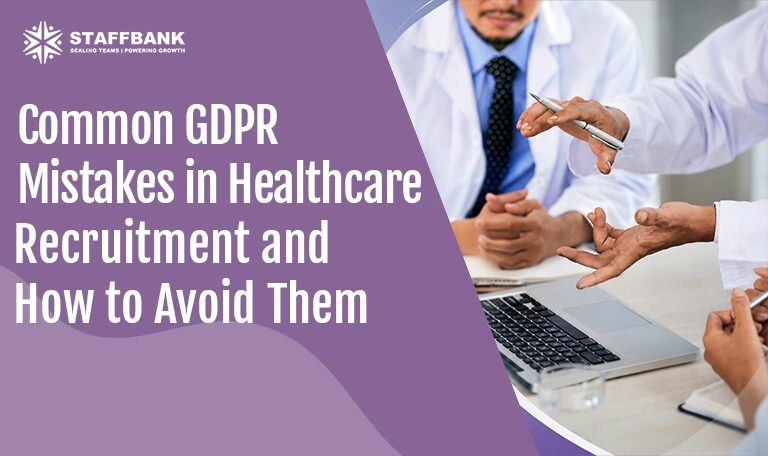
Common GDPR Mistakes in Healthcare Recruitment and How to Avoid Them
Healthcare recruitment involves handling highly sensitive personal information, from CVs and identification documents to professional certifications and background checks. With strict data protection regulations in place, healthcare organisations and recruitment agencies must ensure that candidate information is collected, stored, and processed responsibly.
Failing to follow GDPR guidelines can lead to financial penalties, reputational damage, and loss of trust among candidates and clients. This is why maintaining strong healthcare recruitment GDPR compliance practices is essential for every healthcare staffing provider.
In this blog, we explore the most common GDPR mistakes in healthcare recruitment and how organisations can avoid them.
Why GDPR Matters in Healthcare Recruitment
The General Data Protection Regulation (GDPR) was introduced to protect the privacy and personal data of individuals across the UK and Europe. In healthcare recruitment, agencies often process sensitive candidate information, including:
- Personal identification details
- Employment history
- Medical clearances
- Background checks
- Right-to-work documentation
- Professional registrations
Because healthcare recruitment deals with confidential information, organisations must adopt clear and transparent data protection processes.
Common GDPR Mistakes in Healthcare Recruitment
1. Collecting More Candidate Data Than Necessary
One of the most common mistakes is requesting excessive information during the recruitment process.
Many healthcare recruiters collect unnecessary personal details before they are actually required. Under GDPR, organisations should only gather information that is relevant and necessary for recruitment purposes.
How to Avoid It
- Review all candidate application forms
- Remove unnecessary fields
- Collect sensitive documents only when needed
- Conduct regular data audits
Keeping data collection minimal supports better healthcare recruitment GDPR compliance and reduces risk exposure.
2. Failing to Obtain Proper Candidate Consent
Recruiters often store candidate CVs and personal details without clear consent for future use. GDPR requires organisations to explain how candidate data will be used and stored.
How to Avoid It
- Use clear consent forms
- Explain how long data will be retained
- Allow candidates to opt in for future opportunities
- Maintain records of consent
Transparency builds trust with healthcare professionals and improves recruitment credibility.
3. Poor Data Storage and Security Practices
Healthcare recruitment agencies manage large volumes of confidential information. Weak passwords, unsecured spreadsheets, or outdated systems can expose sensitive data to cyber threats.
How to Avoid It
- Use encrypted recruitment software
- Implement secure cloud-based systems
- Restrict access to authorised staff only
- Conduct regular cybersecurity training
- Enable multi-factor authentication
Strong data security is a critical part of maintaining effective healthcare recruitment GDPR compliance procedures.
4. Retaining Candidate Data for Too Long
Another common GDPR issue is storing candidate information indefinitely without a valid reason.
Under GDPR, organisations should not keep personal data longer than necessary.
How to Avoid It
- Create a clear data retention policy
- Set automatic deletion schedules
- Regularly review inactive candidate records
- Inform candidates about retention timelines
A structured retention process reduces legal risks and improves operational efficiency.
5. Lack of Transparency in Data Usage
Candidates have the right to know how their information is processed, shared, and stored.
Some recruitment agencies fail to provide clear privacy notices or fail to explain third-party data sharing practices.
How to Avoid It
- Publish an updated privacy policy
- Clearly explain recruitment workflows
- Inform candidates if data will be shared with healthcare employers
- Make privacy notices easy to access
Clear communication strengthens candidate confidence and supports GDPR compliance efforts.
6. Ignoring Candidate Data Access Requests
Under GDPR, candidates can request access to their personal data, ask for corrections, or request deletion.
Some healthcare recruiters either delay responses or fail to respond altogether.
How to Avoid It
- Establish a formal data request process
- Train recruitment teams on GDPR rights
- Respond to requests within the required timeframe
- Keep detailed records of requests and actions taken
Efficient handling of data requests demonstrates professionalism and accountability.
7. Using Non-Compliant Third-Party Vendors
Many healthcare recruitment agencies use external tools for payroll, CRM management, applicant tracking, or background screening. If these vendors are not GDPR compliant, the recruitment agency may still be held responsible.
How to Avoid It
- Vet all third-party providers carefully
- Ensure vendors meet GDPR requirements
- Sign proper data processing agreements
- Conduct periodic compliance reviews
Third-party risk management is an essential component of healthcare recruitment data protection.
Best Practices for GDPR Compliance in Healthcare Recruitment
To strengthen GDPR compliance, healthcare recruiters should adopt the following best practices:
Conduct Regular GDPR Training
Ensure recruitment teams understand:
- GDPR principles
- Data handling procedures
- Consent management
- Candidate rights
- Cybersecurity awareness
Implement Clear Internal Policies
Document procedures for:
- Data collection
- Data retention
- Data sharing
- Security protocols
- Breach reporting
Clear policies create consistency across recruitment operations.
Use GDPR-Compliant Recruitment Technology
Modern applicant tracking systems can help organisations:
- Secure candidate data
- Automate consent management
- Monitor data access
- Manage retention timelines
Technology plays a major role in improving healthcare recruitment GDPR compliance processes.
Perform Routine Compliance Audits
Regular audits help identify:
- Security vulnerabilities
- Unnecessary data storage
- Process gaps
- Compliance risks
Proactive monitoring reduces the likelihood of costly GDPR violations.
The Importance of GDPR Compliance for Healthcare Recruiters
Healthcare organisations and staffing agencies operate in a highly regulated environment where trust and confidentiality are critical.
Strong GDPR compliance can help organisations:
- Protect sensitive candidate information
- Build trust with healthcare professionals
- Reduce legal and financial risks
- Improve operational transparency
- Strengthen brand reputation
In today’s digital recruitment landscape, effective healthcare recruitment GDPR compliance is not just a legal requirement, it is a competitive advantage.
Final Thoughts
GDPR compliance in healthcare recruitment requires more than basic data protection measures. Recruiters must adopt transparent, secure, and well-structured processes to protect candidate information at every stage of the hiring journey.
By avoiding common GDPR mistakes and implementing robust compliance practices, healthcare recruitment agencies can improve security, strengthen candidate trust, and operate with greater confidence in an increasingly regulated industry.