
Why Remote Workforce Solutions Are the Future of Work
The way businesses operate has fundamentally changed. What was once considered a temporary response to global disruption has now become a long-term strategic shift. Companies across industries are rethinking how they hire, manage, and scale talent, increasingly turning to international outsourcing services as they move away from rigid office-based models toward more flexible and global approaches.
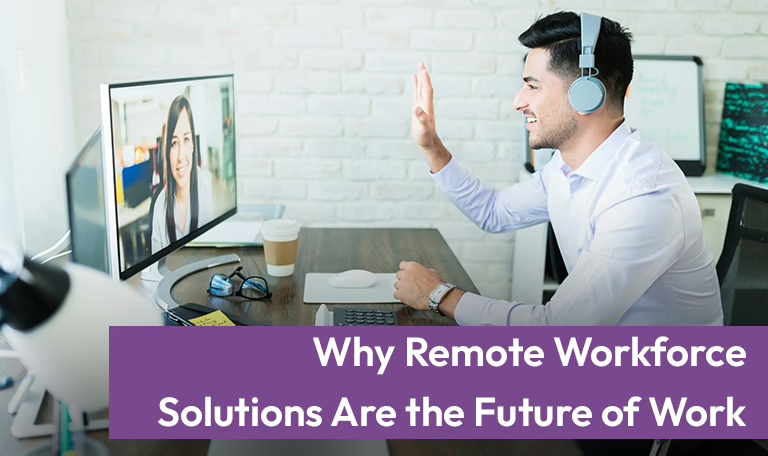
This evolution is not just about working from home, it’s about redesigning work to be more efficient, inclusive, and future-ready.
The Shift From Traditional Offices to Distributed Teams
For decades, work revolved around physical offices, fixed schedules, and local hiring. While this model worked in the past, it also limited access to skills and increased operational costs.
Modern businesses now rely on systems that allow teams to collaborate across locations, time zones, and cultures. A well-structured remote recruitment team enables organizations to source, onboard, and manage professionals regardless of geography, ensuring continuity and speed in hiring.
This shift has changed how success is measured, focusing on output and impact rather than hours spent at a desk.
Access to Global Talent Without Borders
One of the strongest drivers of remote work adoption is unrestricted access to talent. Businesses no longer need to compete in saturated local markets when they can hire offshore talent with specialized skills and global experience.
This approach allows companies to:
- Fill niche roles faster
- Build diverse, multicultural teams
- Reduce skill gaps without relocation challenges
Global hiring is especially effective for technology, digital marketing, finance, customer support, and operations roles.
Cost Efficiency That Supports Sustainable Growth
Distributed workforce models help businesses significantly reduce overheads. Savings on office space, utilities, and infrastructure free up capital for innovation and expansion.
Many organizations now rely on offshore recruiting solutions to maintain quality hiring while keeping costs predictable. This model allows businesses to scale their workforce strategically without compromising on performance or expertise.
Employees also benefit from reduced commuting stress and improved work-life balance, creating a more sustainable work environment for everyone involved.
Productivity Thrives in Flexible Work Models
One of the biggest misconceptions about remote work is reduced productivity. In reality, flexible environments often lead to better performance when supported by the right processes.
Remote professionals benefit from:
- Fewer interruptions
- Autonomy over their schedules
- Work environments tailored to focus
With clear goals and accountability, distributed teams consistently match, or exceed, traditional office productivity levels.
Technology Enables Seamless Collaboration
Advancements in digital tools have made location-independent work practical and scalable. Platforms like Zoom, Slack, and Microsoft Teams have redefined communication and teamwork.
These tools support:
- Real-time collaboration
- Secure file sharing
- Transparent project management
Technology ensures that distance no longer impacts efficiency or engagement.
Smarter Hiring Through Strategic Outsourcing
As hiring becomes more complex, many organizations are turning to talent acquisition outsourcing to streamline recruitment. Outsourced hiring models reduce internal workload while ensuring access to experienced recruiters and proven hiring frameworks.
In many cases, businesses also build a dedicated recruitment team that works exclusively on their roles, culture, and long-term workforce goals. This approach improves hiring accuracy and speeds up time-to-fill critical positions.
Scalability and Business Agility
A distributed workforce allows companies to scale quickly and adapt to market changes. Whether expanding into new regions or responding to fluctuating demand, businesses gain the flexibility to grow without long-term infrastructure commitments.
This agility is especially valuable in competitive industries where speed and adaptability determine success.
Employee Satisfaction and Retention
Flexible work models prioritize employee well-being. Professionals increasingly value autonomy, flexibility, and meaningful work over rigid schedules.
Organizations that embrace remote and hybrid structures often see:
- Higher engagement levels
- Improved retention
- Stronger employer branding
Happy employees are more loyal, productive, and invested in long-term success.
The Future Is Flexible and Borderless
The future of work is not tied to a physical location. It’s built on smart hiring strategies, digital collaboration, and adaptable workforce models. Businesses that embrace flexibility today are better positioned to attract top talent, remain resilient, and scale efficiently in a rapidly changing world.
Remote-first thinking is no longer optional, it’s a strategic advantage.
Staffbank Outsourcing Solutions can help you find the right staffing solutions. Book a call for a free consultation.